Double Heading with N Scale 2-8-8-2 Y6Bs

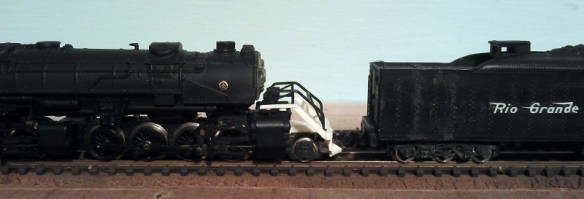
Over the years I have acquired several Y6B mallet 2-8-8-2 steam locomotives made by Rowa.  First produced in 1969 these are beautiful models and run like sewing machines, even by todays standards.  My only issue with them is the motor which, in my opinion, is underpowered for such a large locomotive.  My solution to this is to run two together at the front of a long train, as the railroads often did.  The problem with this is the front coupling is a dummy knuckle coupler and is purely cosmetic.  In this post I wanted to share with you how I overcame this.

These mallet locomotives where first manufactured by MRC/Rowa, then Charmertz/Bemo and finally by Con-Cor/Rivarossi.  They were also released by Con-Cor/Rivarossi as 2-8-8-0 EL-5. Despite minor improvements over the years the main model has stayed the same, here is one sat on the turntable at the roundhouse on Bob Norris layout Somewhere west.

Micro-Trains do offer a conversion kit for this locomotive, No 1048, but all this is is a pair of body mount couplers and you need to cut your own hole in the pilot which can go very wrong.

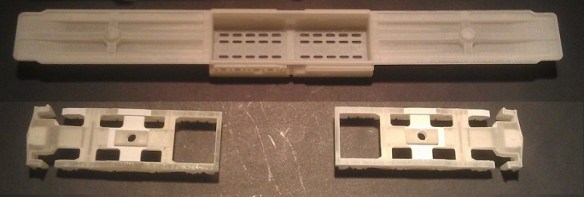
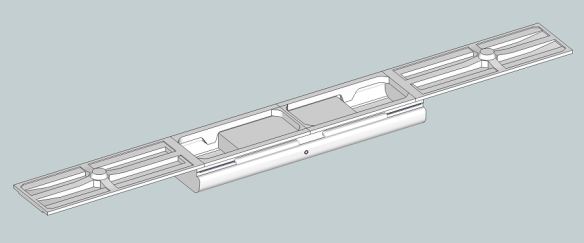
The pilot on the front, as well as having the coupling, also carries the headlight.  The whole assembly, as shown below, is made up from eight parts which includes the main body, handrails, dummy knuckle coupler, front cylinders and headlight, two plastic valve gear bars, clear plastic light corridor and a metal nut used to bolt it onto the locomotive.  The dummy knuckle coupler is not shown (it was missing on this particular locomotive).

Rowa Y6B Pilot Parts

To remove the pilot you will need to first remove the front set pilot wheels.  With the locomotive upside down remove the plastic plug holding in the front wheel set, this usually has a whisker of plastic running passed the wheel set to give it some springiness, again on this particular model it is missing.
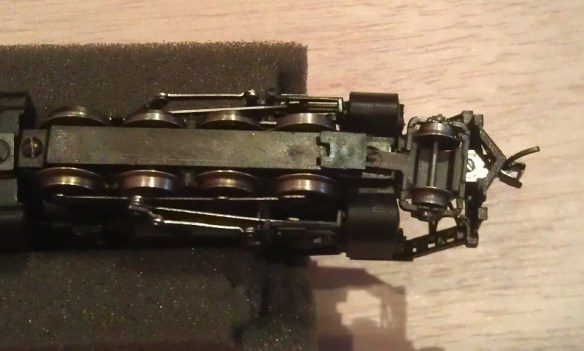
Rowa Y6B Pilot Removal 1

The wheel set then simply lifts out.

Rowa Y6B Pilot Removal 2

The newly exsposed screw holds the pilot in place.Rowa Y6B Pilot Removal 3

Once removed the whole assembly will slide off.
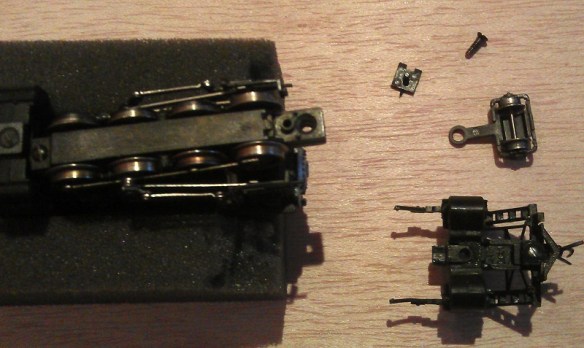
Rowa Y6B Pilot Removal 4

The assembly then comes apart very easily into the seven different parts.  Although I have found out that the very early versions had this assembly glued together and are very reluctant to come apart.

Once I had all the parts separated I set about drawing a 3D model of the main pilot section.  My original intention was to make a replacement part that had a socket to receive a Micro-trains Z scale bodymount coupling.  With the 3D model complete and successfully uploaded to Shapeways I ordered one and as usual within about eight days it arrived on my doorstep.  With this first test print it quickly became apparent that I had incorrectly measured the original because as you can see from the image below the steps are smaller than the original on the left. But this is the reason why I test print everything.
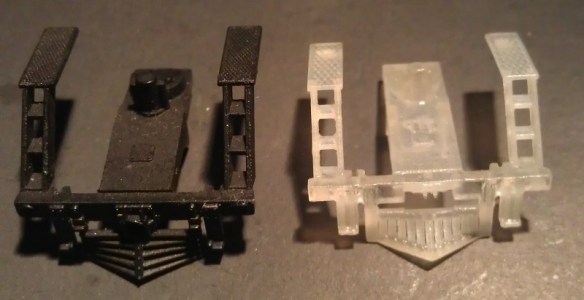
Rowa Y6B Pilot First Print

Although the steps were the wrong size I was still able to experiment with the pilot to see how the Z scale coupler fitted.  Although it did fit well I do find the Z scale couplings really tricky to put together and I felt that it looked too small on such a big locomotive.  You may have also noticed that the cow catcher bars run in a different direction, this is because I used the same 3D model parts I have already drawn for my Atlas 2-8-2 replacement pilots.

So taking all that into account it was back to the drawing board, or at least the laptop.  I first fixed the issue with the steps and I also refined a few other details.  Because I wasn’t keen on the Z scale coupling I created a new version with a pocket to accept the N scale Micro-trains body mount coupling and added horizontal cow catcher bars.
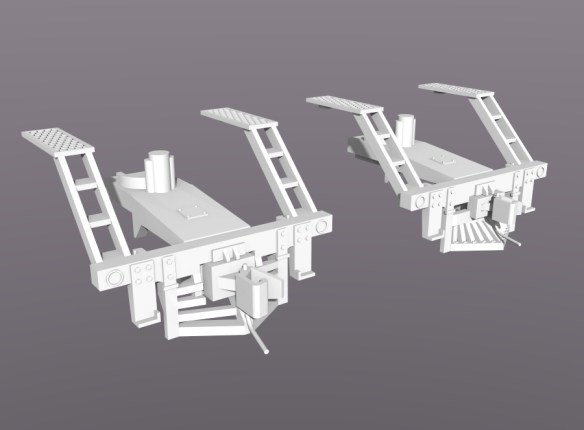
Rowa Pilot Coupling 2

The test prints this time came out fantastic, shown below are the two pilots either side of the original. Z Scale coupling on the left and N scale coupling on the right.

Rowa Y6B Pilots New & Old

To reassemble the pilot, first the handrails need to be secured.  The front two pegs clip into the new pilot and the rear tabs fit under the walkways as shown below.

Rowa Y6B N Pilot Assembly 1

Then the cylinders fit onto the main body and the plastic light strip is inserted into the rear of the headlight.
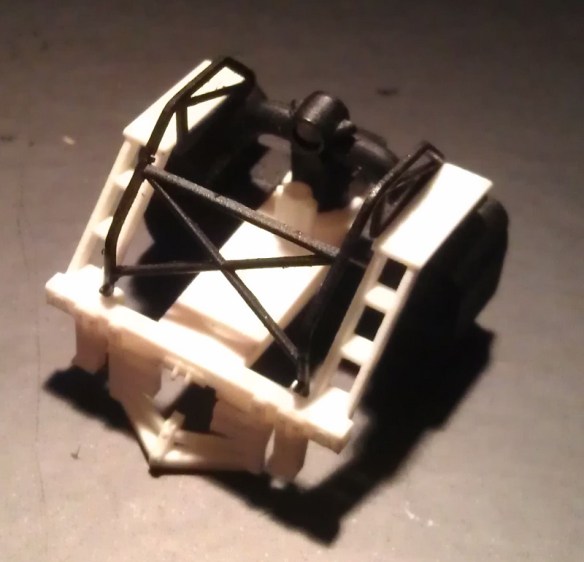
Rowa Y6B N Pilot Assembly 2

The last part to add was the actual coupling.  This slides in from the front and is secured by a screw.  The standard screw which comes with the body mount couplers is too long and would protrude up through the pilot if left as it is, so I cut it short with a pair of side snips. Please use safety goggles if you are going to do this as the ends fly all over the place.  I left about 2mm (0.078″) of the screw protruding from the coupling, the coupling will need to be installed before the screw is fitted.

Next came the actual test fit onto the locomotive and as you can see below it went well.

Rowa Y6B Pilot Test Fit 2 Rowa Y6B Pilot Test Fit 1

The final test was a coupler height check and for this the locomotive is put onto the track and coupled to a Mocro-trains height gauge.

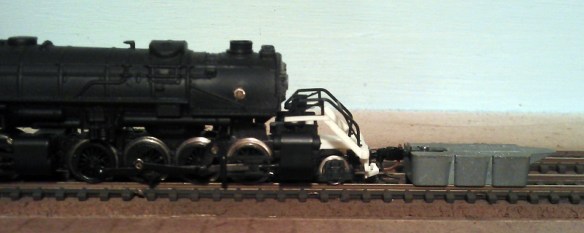
Rowa Y6B Coupler Hight Check 1 Rowa Y6B Coupler Hight Check 2

This same set of checks were also carried out for the pilot with the Z scale coupling and again, as shown below, it all lined up.
Rowa Y6B Coupler Hight Check 4

Rowa Y6B Coupler Hight Check 3

So using the N scale pilot, my preferred coupling, here are two Rowa Y6Bs coupled together.
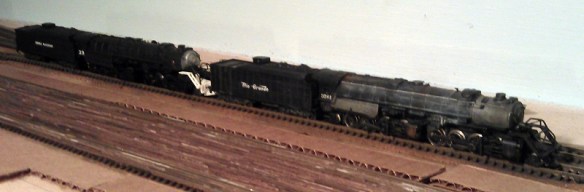
Rowa Y6B x2 1 Rowa Y6B x2 2

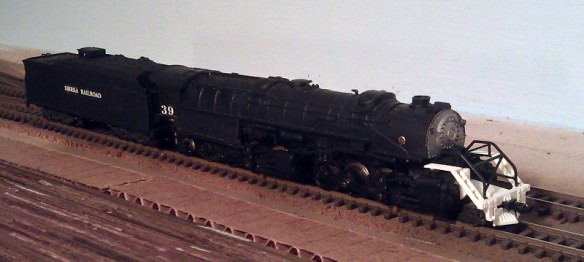
Now I know that the 3D printed pilots work all that is required is a coat of pain.  I used a simple matt black acrylic paint and the finished locomotive looks like this.
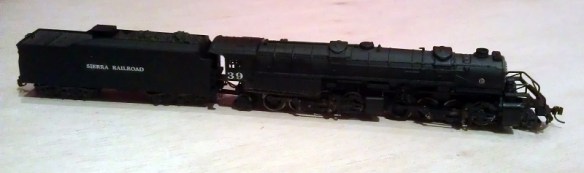
Rowa Y6b Finished Pilot N 1 Rowa Y6b Finished Pilot N 2

Normally when I show a new product I also share with you where you can get it but this week I need to do one more final test before I am happy to release the Rowa Y6B replacement pilots, and that is a full running test on a layout with curves and inclines.  This is to check that the Micro-trains bodymount coupler does not interfere with the leading set of wheels as they are very close.  So in a future post I will have some more pictures, maybe some video and I will let you know where you can purchase your own.


Drawing A Baldwin DT6-6-2000 Center Cab Part 3

So now the DT6-6-2000 is all drawn and the test print has been order it was time to think about the dummy version of the locomotive and how I was going to do it.  In this post I will share with you what I have decided to do.

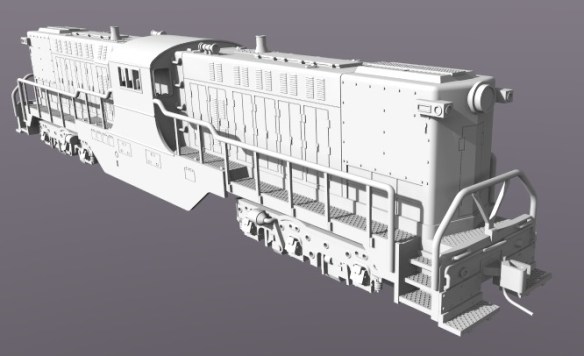
Below is a rendering of the finished shell sat on the Atlas chassis along with the replacement truck side frames.

Finished Baldwin DT6-6-2000

The dummy version of this locomotive needs to look exactly the same as the powered version as I intend to run them together, recreating Mark McDowell’s image in the link below.

http://www.rrpicturearchives.net/showPicture.aspx?id=219383

The first part to do was the trucks.  Having already created the side frames with all their details and parts for the powered DT6-6-2000, I was able to use the same details for the outer face of the dummy trucks. The inside face of the frames are relatively smooth as they don’t require details, just axle pockets for the wheel sets.  I added the side frames to a similar arrangement I had already used with my UP Water Tenders.  Being a typical draughtsman I don’t draw anything twice if I can hep it.  The trucks for the tenders have evenly spaced wheels so I offset the bolster pin, I did this so the center wheel didn’t need to be removed to install in the pin.  For the DT6-6-2000 I wanted to do the same thing but as the wheels are already unevenly spaced in the trucks this meant the pin could be moved closed to the center of the truck as shown Below.

Baldwin DT6-6-2000 Dummy Truck

The truck has been designed to take 3 Fox Vally 36″ metal wheel sets (FVM3611), there are no couplings because they will be body mounted on the shell.

The truck for the other end is exactly the same, just rotated by 180 degrees.  As with my other trucks these are only printable in the Frosted Ultra Detail material from Shapeways.  This is because of the level of detail and the thin sections that are only achievable in this material, the bolster pins are also printed in the FUD to complete the set.

For the chassis I decided to make it out of the White Strong & Flexible material as I did with my DDA40X dummy chassis.  Because the DT6-6-2000 has those large side plates that hang down over the fuel tanks and air cylinders there is very little, if any, of the chassis that will be seen once the dummy locomotive is assembled.  WS&F is ideal because it is lot cheaper than FUD, it can be printed in black and it doesn’t need to be soaked in a solution to remove the waxy residue left on the FUD parts.

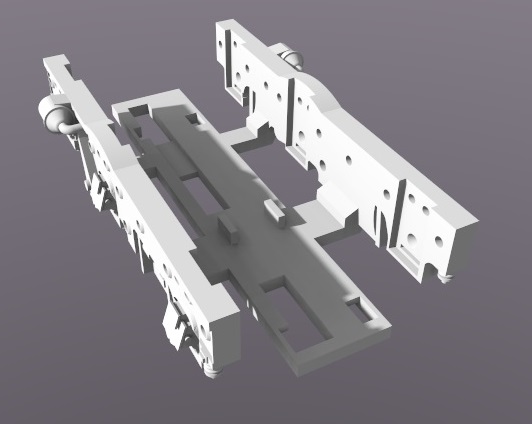
Although it is not really visible I still like to add what detail I can to parts so I included the fuel tanks and air cylinders to the underside of the chassis.  As you can see from the image below the fuel tank is hollow which allows extra weight to be added.  This will be important as the majority of the locomotive will be 3D printed and it will be very light.  With out the extra weight the locomotive will have a tendency to ride up over the rails and come off the tracks, especially if between the powered locomotive and a heavy train whilst going around a tight curve.

Baldwin DT6-6-2000 Dummy Chassis

The chassis looks a lot chunkier than the dummy chassis I produced for my DD35 dummy.  This is because the design requirement for WS&F are thicker than FUD, and it also shorter.  I added the lip around the top of the chassis as a structural element, as with the tie across the top of the up stands.  The bumps on the up stands match the dimples in the shell, but rather than move them down for the dummy I left them in the same location, that way the same shell will fit on either the Atlas chassis or my dummy chassis.  Pictured below are the finished trucks and chassis, they will fit inside the shell using the same fixings and lugs as the Atlas chassis uses. Baldwin DT6-6-2000 Chassis & Trucks

And together the dummy and powered DT6-6-2000s should look something like this.

Baldwin DT6-6-2000 x2

The dummy is in the front, without the fuel and air tank detail on the dummy chassis there would be a big void under the locomotive from this angle.

The test print for the shell is due to arrive this week so in next post I should have an actual model of the DT6-6-2000 to share with you.

Drawing A Baldwin DT6-6-2000 Center Cab Part 2

Over the last few weeks I have been working on the 3D model for the Baldwin DT6-6-2000 center cab locomotive and it is now ready for a test print.  In this post I wanted to share with you some of the details I have included in this new model.

If you missed the first part of this model design you can find it here.  I finished the first part with the image below which showed an overall view of the shell at the then current stage.

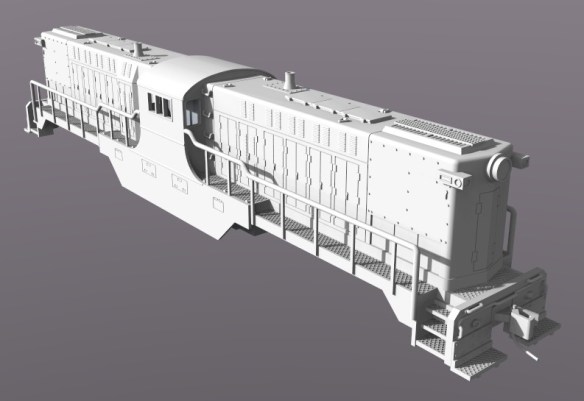
Baldwin DT6-6-2000

Since then I have finished all the little details and fixed several of the issues that were not working.  The biggest issue was the size, or to be more precise, the length.  Although the 3D model has been accurately drawn, this shell has been designed to fit onto a powered chassis taken from an Atlas C-628 with the trucks rotated, as I illustrated in the first post.  The issue arose when the trucks were rotated they were not located in the same position as the DT6-6-2000’s trucks and they clashed with the bulkheads at either end.  To resolve this I have added 100mm at each end, which doesn’t sound a lot and in fact, in N scale, it works out to be an extra 1.25mm overall, but having tried to keep it as accurate as possible, suddenly adding 100mm made it look odd.  To hide this I dispersed the 100mm throughout the model by moving door sets up by 10mm etc and I don’t think you’ll be able to tell.  I also had to add about 60mm to the height because of the chassis being slightly taller but once again I don’t think it will be noticeable in N scale.

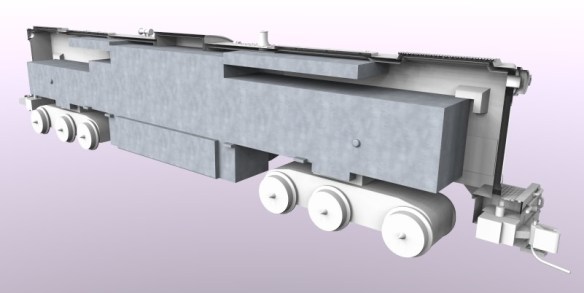
To make sure this would fit the power chassis snugly I also modeled it in along with all of its lumps, bumps and fixing points so these could be replicated in my 3D printed shell.  Below is an image showing the chassis fitted into the 3D model with half the shell removed.

Baldwin DT6-6-2000 Cut Away

I also modeled in the power chassis trucks without their side frames.  This is because I need to provide new side frames as the C-628 frames are not right for this model.  A fellow modeler has also produced side frames for this locomotive in cast resin and when this kit goes up for sale I will include a link to his website for anybody who would prefer to use those.

My truck side frames for this kit, pictured below, are designed to fit directly onto the power chassis trucks using the same fixing lugs.  The side frames also clamp the power pickup strips to the wheel tips so getting the size of the side frames right is very important; if they are loose the locomotive will have bad power pickup or even worse, will simply fall apart. If they are too tight the wheels may not turn easily and this will overstress the motor.

Baldwin DT6-6-2000 Truck 1

Another issue I ran into was that the C-628 trucks are not only taller but also have a lot more going on.  Consequently, when I put my frames over the power chassis trucks you can see way too much.  To resolve this I had to increase the height of the frames by 60mm and blank off some of the clear spaces. However, as pictured below, I don’t think they look too overworked, and on the plus side it adds strength to the print.

Baldwin DT6-6-2000 Truck 2

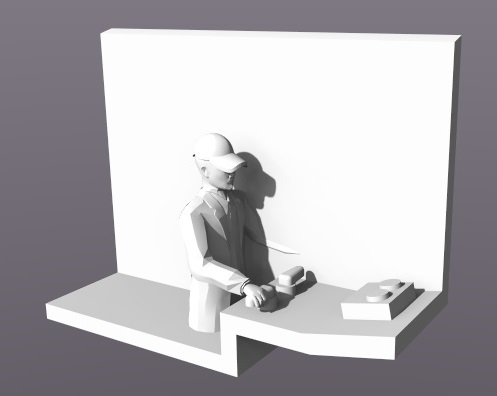
The other major detail I have added is the cab interior and engineer.  Just about all of the ready to run locomotives I have ever purchased don’t have engineers or crew in the cabs and given the capabilities of 3D printing it seems silly to leave them out.  The real DT6-6-2000 has a cab which stretches across the whole locomotive, and as there is an engine in each nose section, you can see through to the other side.  However with this model when you look into the cab from the side all you will be able to see is the C-628 metal chassis, so I have designed a cab section with a blanking wall that is a separate part.  As well as hiding the metal chassis this allows you to paint the inside of the cab and the engineer before fixing it into the shell.  I have provided a cab section with an engineer for both sides allowing either one of the engineers to be removed as required.

Baldwin DT6-6-2000 Engineer

The cab and controls look a little basic but remember this is for an N scale locomotive and they will only be visible through the windows, a bit like the image below.

Baldwin DT6-6-2000 Cab

And if the cab was illuminated with a nice yellow light from above this would look great!

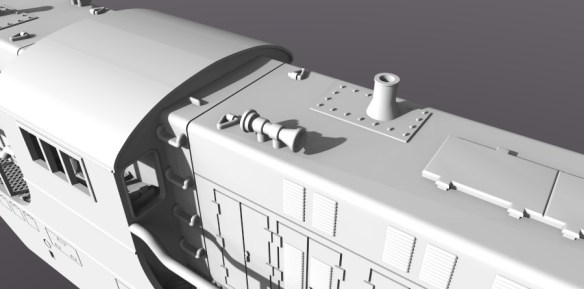
The windows have a recess on the inside of the cab to make it easy to fit a small rectangle of clear plastic as glazing; I will provide a template in the instructions for cutting these to the right size. I have also included details such as the air horns, body lifting brackets and steps on the shell as shown below.

DT6-6-2000 Roof Detail

Behind the headlights I have included a cutaway so after drilling through the headlight an LED can easily be pushed in from behind.

The handrails are all separate parts and I have added holes in the shell which match up to lugs in the handrails, which makes them easier to install.  If you want to make your own handrails out of a thinner material, such as brass wire, the holes are designed to be in the right places so they can be used as guides.

And here is the finished 3D model

Finished Baldwin DT6-6-2000

The test print has now been ordered and in a later post I will show you how it came out.

Drawing A Baldwin DT6-6-2000 Center Cab Part 1

A few months ago I was asked by a fellow modeller, through one of the model railroad forums, if I could draw and design a 3D printed shell for a Baldwin DT6-6-2000 Center Cab. So in this post I will show you what this locomotive is and how the design is coming along.

In 1946 the Baldwin Locomotive Works, who were already manufacturing small switching diesel locomotives, set about designing a locomotive with more power to be used as a transfer locomotive.  Its primary function would be to transfer rolling stock from one freight yard to another locally so it needed the power of a road locomotive but not the speed. It also needed to maintain the visibility and benefits of the smaller switching locomotives.  Baldwin’s answer was the DT6-6-2000 Center Cab.

Baldwin’s naming convention, DT6-6-2000, refers to several things: DT stands for “Diesel Transfer”, the first 6 refers to the number of axles, the second 6 refers to the number of axles powered by traction motors and the 2000 refers to the locomotives horsepower rating.

The locomotive, as the name suggests, has a centrally located cab allowing the engineer to see both ends which makes it easy to couple to rolling stock at either end. Road locomotives normally had a cab at one end with windows only facing forwards, they would either need to be turned at the end of the line or run in pairs with another road locomotive facing the other way.

Here is a link to a picture of Torna Railway No.51 out side the shops at Trona, California, November 7, 1970 courtesy of www.railpictures.net.

The DT-6-6-2000 is powered by two diesel engines, one for each three axle truck. The design was effectively two switching locomotives back to back sharing one cab.  The original prototype had a pair of 8 cylinder normally aspirated diesel engines (Type 608NA) but all the other production locomotives had a pair of 6 cylinder turbocharged diesel engines (Type 606SC).

Several railroads tried the locomotives and a total of 46 were made between 1946 and 1950, each with slight differences as the design improved. There is only one left now and it is preserved at the Illinois Railway Museum in Union, Illinois. The Elgin, Joliet and Eastern Railway purchased the most ordering 27 in total but for me I like the 6 ordered by the Atchison, Topeka and Santa Fe Railway mainly because of the fantastic black and white striped paint job, so for this model I am going to base it on AT&SF No.2601.

Here is a link to a great photo of 2601 at San Bernardino on the 18th April 1952

And another on the same day.

And again at San Bernardino on the 24th July, 1952

(The three links above are from http://www.snowcrest.net/photobob/ where you can buy prints of the photos)

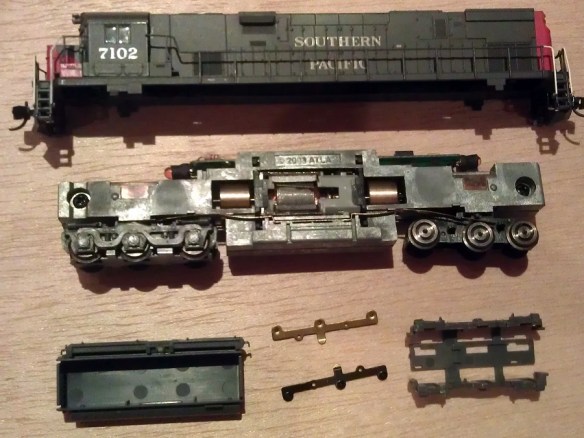
As this is a locomotive that has never been mass produced in N scale before, not even in brass, there was no easy place to start.  The shell will be completely 3D printed so that is not a problem, but as to what power chassis to use we had to do some digging around.  The biggest problem with the power chassis is the trucks, unlike most other diesel locomotives the axles in the trucks are not evenly spaced.  The DT6-6-2000’s first axle is spaced further apart than the other two as you can see in the photo links above.  The answer came in the form of an Atlas model of an Alco C-628 as pictured below. ( The C-630 will also work as they have the same chassis).

Atlas C-628 1

The Atlas C-628 is a very good running model but the reason why this locomotive is perfect is because of the trucks as shown below.

Atlas C-628 2

On the C-628 they are the same as the DT-6-6-2000 in that they are not evenly spaced however they are facing the wrong way and the truck side frames are completely wrong for the DT-6-6-2000.  This is not an issue because the side frames are only cosmetic and pop off as shown below.

Atlas C-628 3

Also because of the way the trucks have been designed they can also be removed and re-installed backwards as shown below.

Atlas C-628 4

The chassis is now ready to be used for a DT-6-6-2000.  As the chassis is a bit shorter than the DT6-6-2000 I have designed the shell to fit onto it without any modifications, except for turning the trucks around.  The Atlas shell also has several areas designed to receive the lugs on the chassis so that it simply clips on and the DT6-6-2000 shell will be the same.  The couplings will be body mounted Micro-Trains.

The 3D model for the shell is almost finished and below is a screen shot showing the progress. Baldwin DT6-6-2000

The interior of the cab and trucks still require modelling and there are some small details to be added around the shell.  The hand rails look very chunky because they are modelled at the smallest diameter that can currently be 3D printed however they will be printed as a separate part so wire rails can be hand made if required.

Hopefully I will get the model finished over the next few weeks and get a test print ordered.  In a later post we will look at fitting the shell to the chassis and finishing up the model.


A Dog House for my Tender

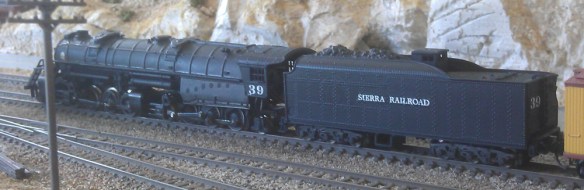
Among all the big things I have been making with 3D printing there are also the odd small parts and I had a request a little while ago for a dog house.  Now as much as I am a fan of our four-legged friends sadly this is not a building for them!  The name ‘Dog House’ in railroad terminology refers to a small shelter on top of the tender for the brakeman; this dates back to the days of roof walks and cabooses.  With freight trains getting longer the brakes on the locomotive and caboose rapidly became insufficient to stop the trains so it was the brakeman’s job to go up and down the roof walks and apply the brakes on the individual cars.  The brakemen usually traveled in the caboose but often it was necessary to station a man at the head of the train. Space on the locomotive footplate was limited.  This led to the Dog Houses being added on top of the tender, facing towards the back of the train.  From this small building the brakeman had shelter from the elements and he could see what was happening with the cars and his fellow roof walkers. As far as I know only men did this job?

Several railroads used Dog Houses made from a variety of materials; the first Dog House I am going to 3D print will be based on a steel plate structure as used by the Norfolk & Western on their huge Y6B articulated steamers.

Dog House 1

Yes, I know this is a Sierra Railroad locomotive and I know they never had a Y6B, but I like it!

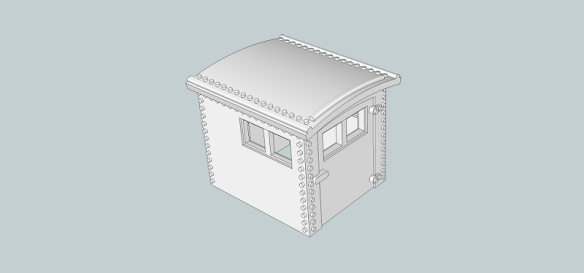
I had a request for a steel Dog House to replace a damaged one from a Rowa Y6B, the same model as shown above.  As I have a model of this locomotive it was a simple case of measuring the original and reproducing it as a 3D model; the trick is to get the detail large enough to print but not too big that it looks out of scale.  As shown below the structure is hollow, not only to reduce the cost, but also to make it realistic.  The thinnest part is the center bar between the windows, but it is just on the limit of what is printable for the FUD material, so it should be okay.

N&W Dog House

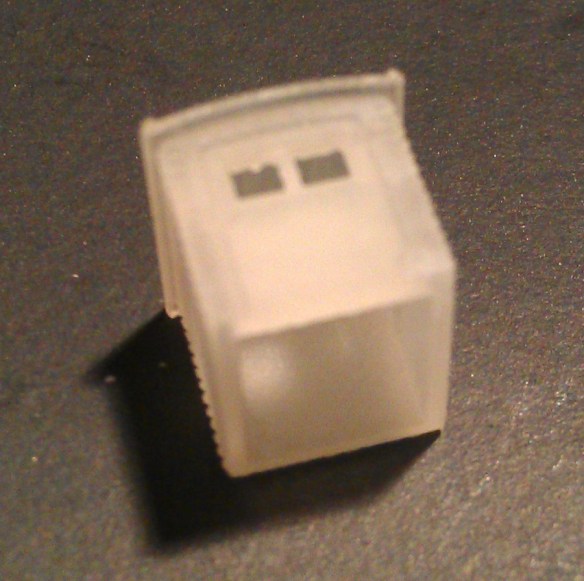
Once printed the Dog House spent the night in a jar of Goo Gone followed by a wash-off in warm soapy water. This removes the residue from the print processes, please see my FAQ section for more information. After cleaning it was ready to be painted and added to a model.

Steel Dog House 1 Steel Dog House 2

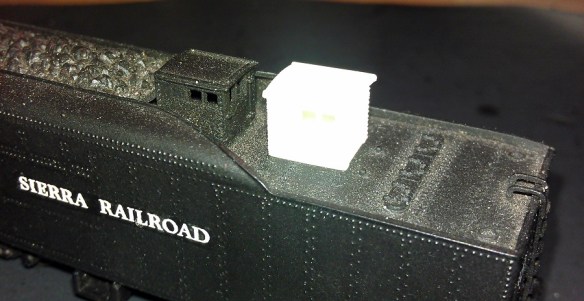
As my Y6B already has a Dog House this particular one is now a spare but I always test print all my designs before I make them available to buy.

Steel Dog House 3 Steel Dog House 4

You can get the Dog Houses here.

I also plan on doing a timber Dog House and that will be in a later post.

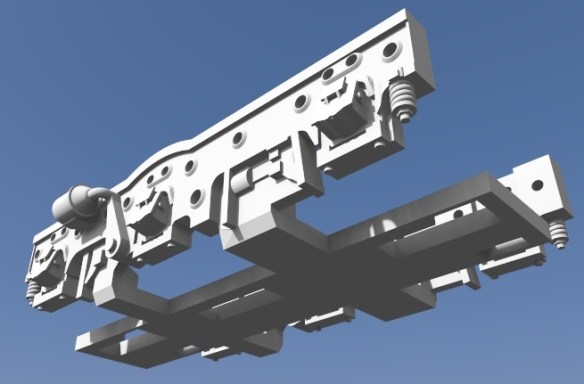
A Dummy Chassis For a Bachmann EMD DDA40X

The problem with kit bashing is the spare parts left lying around afterwards! With the new Bachmann DDA40X chassis being used for my 3D printed DD35 models, Bob, who does the painting and assembling, realized he was starting to get a lot of spare, brand new DDA40X shells lying around and he came up with a great idea.  Why not print a dummy chassis and trucks to use with the spare shells? They can be used as dummy locomotives or even mid train helpers.

The DD35 locomotive shell was designed to fit directly onto the DDA40X chassis, after it was shortened by 24mm, and the DD35 dummy locomotive uses exactly the same shell.  So the theory is to take the DD35 chassis and lengthen it by 24mm which should make it into a DDA40X dummy chassis. The main differences would be the fuel tank and the ends of the new chassis. The DD35 dummy chassis, pictured below, has the fuel tanks permanently attached as part of the print and the ends are shaped to match the DD35 shell.

EMD DD35 Chassis Kit

The DDA40X fuel tank was much longer then the DD35’s and was all one piece as opposed to being made from a pair of GP35 tanks.  Bachmann made the DDA40X fuel tank out of a strong plastic with a metal insert which added weight to the locomotive.  It was a removable item which clipped onto the underside of the metal chassis.  After lengthening the new chassis I roughly modeled in the DD40AX fuel tank and positioned it as shown below.

DDA40X Chassis & Fuel Tank

I added lugs which would drop down and line up with the fixing holes in the fuel tank, so when printed the real tank will clip on in the same way as it did to the metal Bachmann chassis.  The cross bar in the middle is designed to give some rigidity to the large opening but I made sure it was above the metal insert.  The ends of the chassis didn’t need to be as long as I originally intended because, as pictured below, the Bachmann shell changes shape at the ends, and the flat surface which sits on the chassis is interrupted by the lugs circled in red.  This also repeats at the other end even though there is no cab.

DDA40X Shell 1

I decided to stop the new chassis at the lugs and, because the couplings are a part of the truck assembly, any more material used past the lugs would be redundant and only add to the cost.

As there is no detail on this chassis, because the original fuel tank is being reused, it didn’t make sense to print this in the FUD material as it would be more expensive, therefore this chassis will be made from Shapeways’ White Strong & Flexible (WS&F) material.  This is my first print using this material and it has some different design criteria; mainly that the minimum thickness of material is higher. However, even with thicker walls, the cost works out a lot cheaper than if printed in FUD.

The final design for the new chassis looks like this.

DDA40X Chassis

The test print will be printed in the WS&F material along with some DD35 dummy trucks in the FUD material.  Although these trucks technically are not correct for this locomotive it will be a good test to check the chassis.  The plan is to draw up some DDA40X trucks to be made available with this chassis by revising the DD35 truck design.

Next time I will show you how the WS&F material came out and the process of finishing the model.